
NiTi Instruments in Endodontics: Why They Became the Industry Standard
In modern endodontics, the question is no longer whether NiTi instruments should be used, but how well they are integrated into a clinic’s or manufacturer’s system. What began as a technical upgrade has quietly become a structural change in how root canal treatment is delivered, scaled, and managed.
Across private clinics, dental groups, hospitals, and manufacturing partners, we see the same pattern repeat itself. As treatment volume increases and workflows become more standardized, traditional stainless steel instruments start to show their limits—not dramatically, but consistently. Variability increases, fatigue accumulates, and outcomes become harder to control across different operators.
This is the environment in which NiTi instruments in endodontics moved from “advanced option” to baseline expectation.
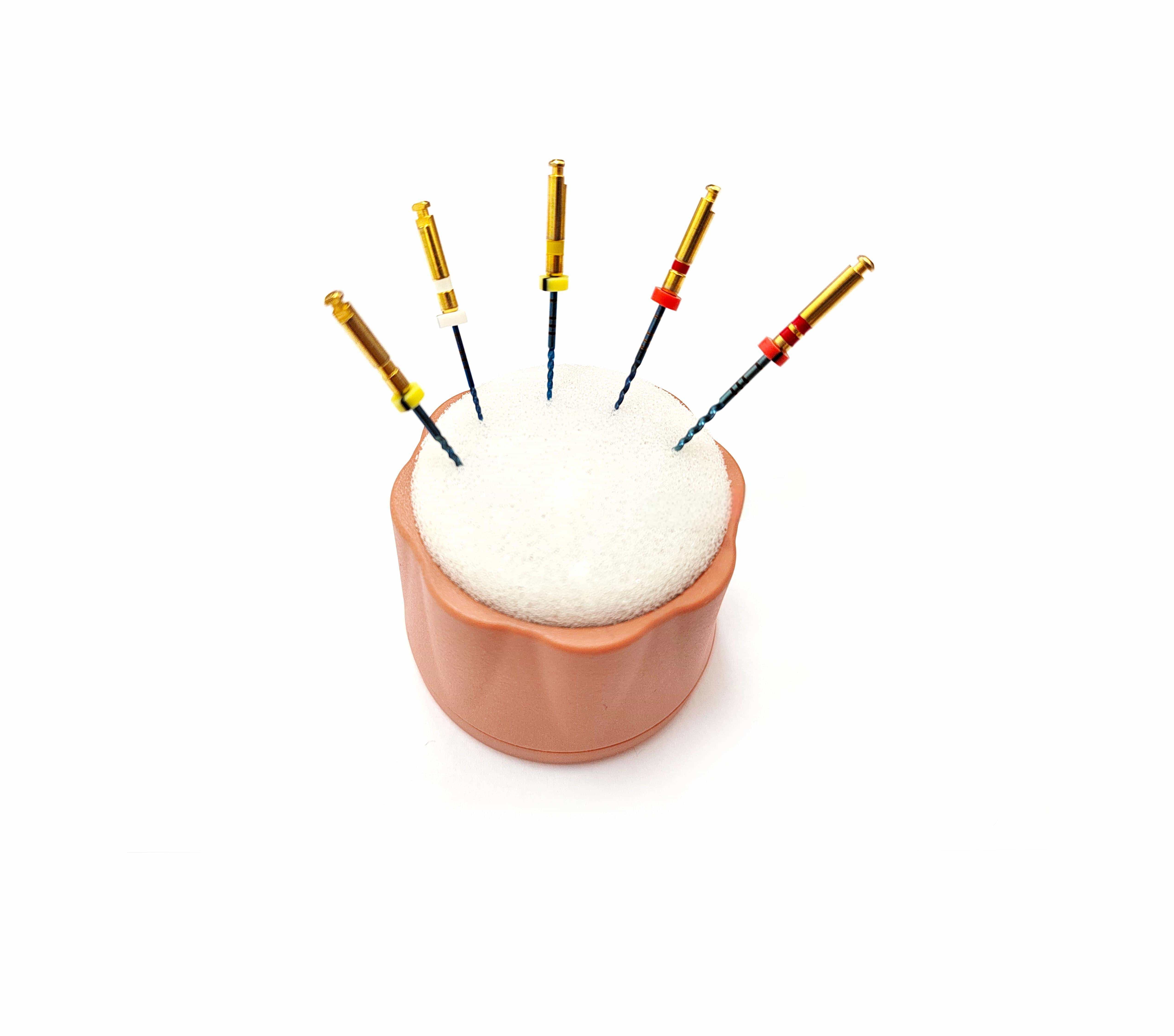
From Material Choice to Workflow Decision
Most clinics don’t adopt NiTi instruments because of material science. They adopt them because something in the workflow stops working.
It might be a growing number of curved canals that take longer than expected. It might be inconsistent shaping results between clinicians. Or it might be the difficulty of training new staff to reach the same level of confidence as senior practitioners.
NiTi instruments address these issues in a way stainless steel never fully could. Their superelastic behavior allows the file to follow canal anatomy rather than forcing the canal into a straight path. In daily practice, that translates into fewer procedural corrections, smoother progression, and more predictable shaping—even in anatomically challenging cases.
Once clinics experience this level of control, going back becomes difficult.
NiTi Rotary Instruments and the Rise of Standardization
The introduction of NiTi rotary instruments changed more than just hand fatigue. It changed how clinics think about repeatability.
Rotary systems, combined with torque-controlled motors, reduce dependence on individual technique. This matters enormously for dental groups and hospitals, where treatment quality must remain consistent across multiple chairs and multiple clinicians.
In our experience, the clinics that benefit most from NiTi rotary systems are not necessarily the most technically advanced ones—but the ones trying to scale. As soon as standard operating procedures become a priority, NiTi systems stop being a “nice upgrade” and start being operational infrastructure.
That is also why distributors and procurement teams increasingly focus on system stability rather than novelty. A rotary file that performs consistently over time is more valuable than one that promises marginal gains but introduces variability.
How NiTi Instruments Are Actually Used in Daily Practice
Despite constant innovation, the role of NiTi instruments in endodontics has remained remarkably stable. They are primarily responsible for shaping efficiency and anatomical preservation, while other instruments support access, glide path creation, and finishing.
What matters most is not aggressive cutting or speed, but controlled progression. Clinics that integrate NiTi instruments into disciplined protocols—rather than relying on improvisation—tend to report fewer complications and more predictable outcomes.
This is also where differences between suppliers become apparent. On paper, many NiTi instruments look similar. In practice, consistency across batches, heat treatment stability, and geometric precision have a far greater impact on long-term results than most marketing claims suggest.
Why Clinics, Distributors, and OEMs Evaluate NiTi Differently—but Choose It for the Same Reason
Interestingly, different B-end users approach NiTi instruments from different angles.
Clinics focus on treatment confidence and efficiency.
Dental groups care about training curves and standardization.
Hospitals prioritize reliability and risk control.
Distributors look for stable demand and predictable performance.
OEM manufacturers evaluate process control and long-term supply consistency.
Yet they all arrive at the same conclusion: NiTi instruments reduce uncertainty.
That reduction—whether clinical, operational, or commercial—is what makes NiTi such a durable category in endodontics.
Where Comlea Global Typically Enters the Conversation
At Comlea Global, we are rarely approached at the very beginning of a clinic’s or manufacturer’s journey. More often, we become involved after a transition point—when volume increases, when consistency becomes critical, or when existing supply starts to show limitations.
At that stage, the conversation is no longer about individual files. It is about system compatibility, batch stability, clinical feedback, and long-term reliability. NiTi instruments are already assumed. The real question becomes how well those instruments support the client’s broader objectives.
This is where experience across clinics, distributors, and OEM manufacturing becomes more valuable than isolated product features.
Conclusion: NiTi Instruments as Infrastructure, Not Innovation
NiTi instruments did not replace clinical judgment, nor did they eliminate complexity. What they did was make complexity manageable and outcomes more predictable.
That is why NiTi rotary instruments are no longer viewed as advanced tools, but as foundational components of modern endodontic practice. For clinics and manufacturers alike, the decision is not about following trends—it is about building systems that remain reliable as demands increase.
And once that perspective shifts, the conversation naturally moves beyond products and toward partnerships.
FAQ:
What are NiTi instruments mainly used for in endodontics?
They are used to shape root canals efficiently while preserving natural anatomy, especially in curved or complex canals.
Why are NiTi rotary instruments important for clinics at scale?
They reduce operator-dependent variation and support standardized treatment protocols across multiple clinicians.
Are NiTi instruments suitable for both clinics and OEM manufacturers?
Yes. Clinics value clinical predictability, while OEMs value process stability and repeatable performance—NiTi supports both.
What should buyers focus on when selecting NiTi instrument suppliers?
Beyond design, factors such as consistency, heat treatment control, and long-term supply reliability are critical.
Follow Us


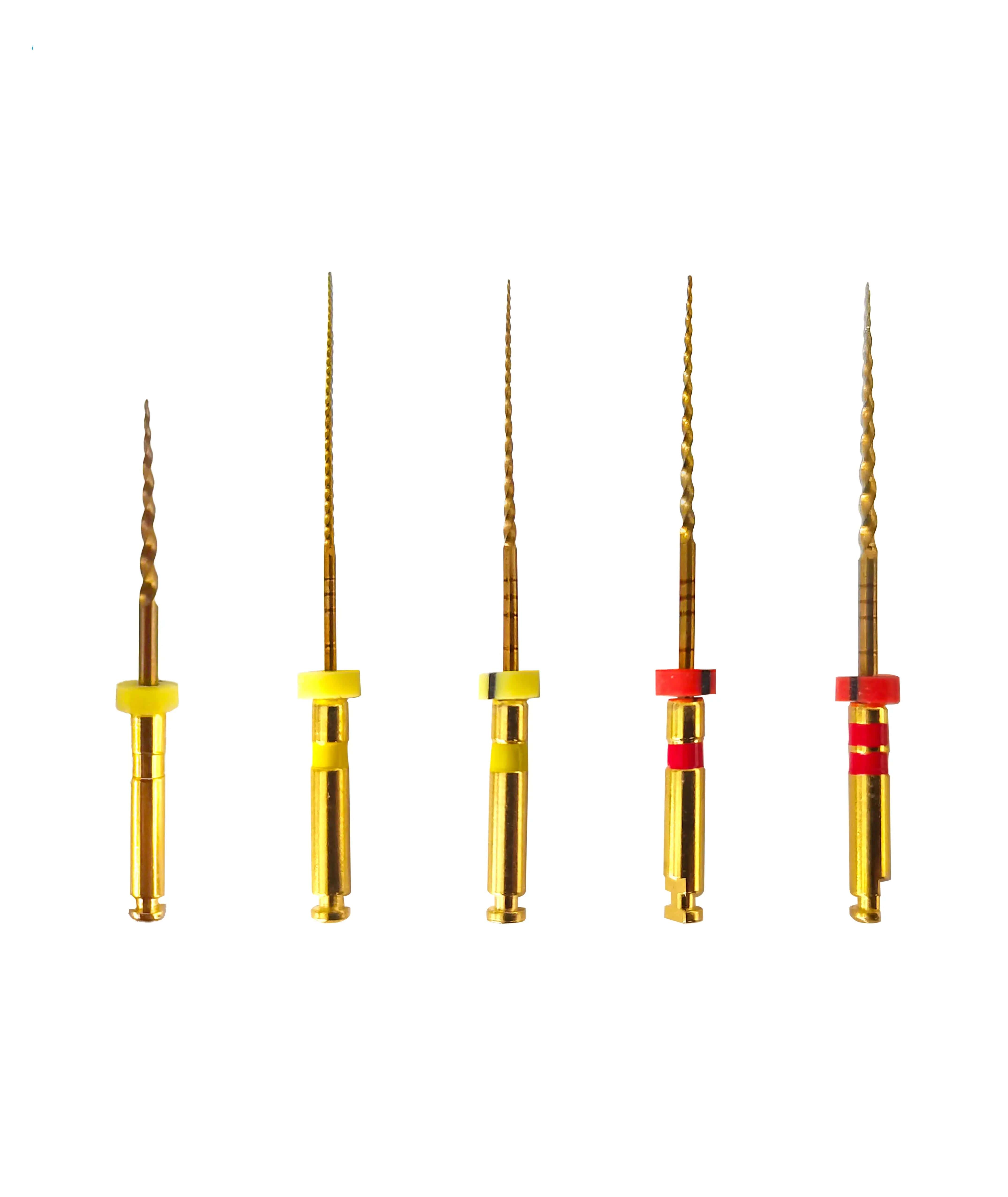

Contact Us
+86 13651660950
+86 13816828040
peter.chen@comlea.cn
lu.l@comlea.cn
Lane 599, 1# 810,Shuangdan Road, Jiading District, Shanghai